
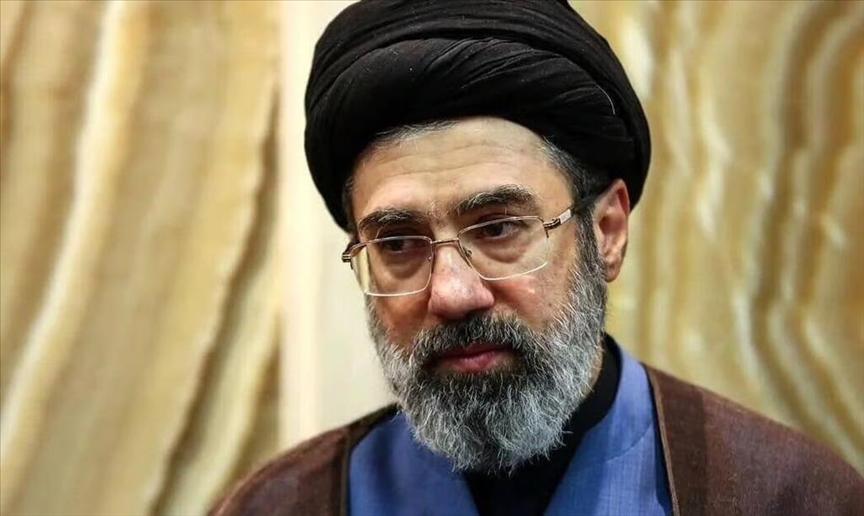
Nine days after the United States and Israel launched their joint assault on Iran, killing Supreme Leader Ayatollah Ali Khamenei and devastating dozens of military and government sites across the country, the Islamic Republic moved decisively to fill the power vacuum at the top of its system. On Sunday, Iran's Assembly of Experts — the clerical body constitutionally empowered to select the Supreme Leader — elected Mojtaba Khamenei, the 56-year-old son of the slain ayatollah, to succeed his father. Iranian state television confirmed the appointment. Mojtaba Khamenei has long been considered close to the Islamic Revolutionary Guard Corps and is expected to maintain the ideological hard-line that defined his father's 37-year rule. His elevation came despite earlier statements by President Trump that the younger Khamenei would be an unacceptable choice, and despite prior Israeli threats to target those involved in the succession process.
The war that produced this succession began in the predawn hours of February 28, when Israeli jets, acting under the name "Operation Roar of the Lion," dropped approximately 30 bombs on Khamenei's residential compound in Tehran. U.S. forces simultaneously launched Tomahawk cruise missiles and conducted airstrikes from fighter jets across more than 500 sites spanning Tehran, Isfahan, Qom, Karaj, and Kermanshah. The strike was the culmination of months of military planning — Israeli Defense Minister Israel Katz disclosed last week that Prime Minister Benjamin Netanyahu had personally set the assassination of Khamenei as a strategic objective back in November 2025. The elder Khamenei was killed at his office within his compound, becoming the first sitting Supreme Leader of Iran to be assassinated. His wife, Mansoureh Khojasteh Bagherzadeh, died from her injuries three days later on March 2.
Iran's response has been massive and wide-ranging. Since February 28, the country has fired more than 500 ballistic and naval missiles and approximately 2,000 drones at targets across the region, according to a military source cited by the IRGC-affiliated Fars News Agency. Roughly 40 percent of those launches were directed toward Israel, while 60 percent targeted U.S. military installations and the Gulf states that host them — including Bahrain, Saudi Arabia, Qatar, and the United Arab Emirates. Drones struck an oil terminal at the Fujairah port in the UAE, set off explosions near Dubai and in Doha, and severely disrupted commercial aviation across the Gulf. The United States embassy in Riyadh, Saudi Arabia, was also hit by a drone strike, as was the U.S. embassy in Kuwait, which Secretary of State Marco Rubio ordered closed indefinitely following an Iranian missile strike. A friendly fire incident on March 2 further complicated matters, when a Kuwaiti F/A-18 shot down three American F-15E fighter jets; all six crew members survived.
On Sunday — the same day Iran announced its new Supreme Leader — Israeli jets struck Iranian oil facilities for the first time since the conflict began, generating enormous plumes of black smoke visible for miles. Iran retaliated by targeting a desalination plant in Bahrain. The U.S. military also confirmed the death of a seventh American service member, a soldier who died in Saudi Arabia from wounds sustained in an Iranian drone attack. Six Army Reserve soldiers had been killed the previous week in a drone strike at a command center in Kuwait. President Trump and Vice President JD Vance attended the dignified transfer ceremony for those fallen service members on Saturday.
In Washington, the political debate over the conflict sharpened this week. The Senate voted 53-47 to reject a bipartisan war powers resolution, introduced by Sen. Tim Kaine (D-Va.) and Sen. Rand Paul (R-Ky.), that would have required Trump to seek congressional authorization to continue the military campaign. Sen. John Fetterman (D-Pa.) joined Republicans in opposing the measure; Paul was the only Republican to support it. The vote was largely symbolic — Trump would almost certainly have vetoed any bill constraining his war powers — but it crystallized the deep divisions in Congress over a conflict that has already claimed seven American lives and shows no signs of a swift resolution.
The human cost continues to mount. Preliminary figures compiled by international monitoring groups place the death toll in Iran at more than 1,332 civilians killed since the start of the campaign, with thousands more wounded. One of the most devastating incidents cited by human rights groups was a double-tap airstrike on an elementary school near a military compound in southern Iran, which killed approximately 175 people, most of them young girls. Israeli officials have not confirmed the attack. The international community remains sharply divided: China condemned the strikes as a violation of the UN Charter, Russia described the assault as an "unprovoked act of armed aggression," and UN Secretary-General António Guterres accused the United States and Israel of "squandering" an opportunity for diplomacy. Canada's Prime Minister Mark Carney said he supports the strikes "with some regret," describing them as an extreme example of a fracturing international order.