
For a conflict that has brought little good news, Thursday and Friday offered a brief moment of relief. Ukraine and Russia completed a two-day prisoner-of-war exchange, releasing 500 soldiers each — 200 on Thursday, March 5, and 300 more on Friday, March 6 — in what U.S. Special Envoy Steve Witkoff described as "another prisoner exchange with 1,000 individuals returned following agreements reached during the recent trilateral negotiations in Geneva with the United States." Ukrainian President Volodymyr Zelenskyy posted a video of the moment of return: dozens of men stepping off white buses into the embrace of border guards and loved ones. "Today, 200 Ukrainian families received the most-awaited message — their loved ones are coming home," Zelenskyy wrote on social media Thursday. Two Ukrainian civilians were also among those returned.
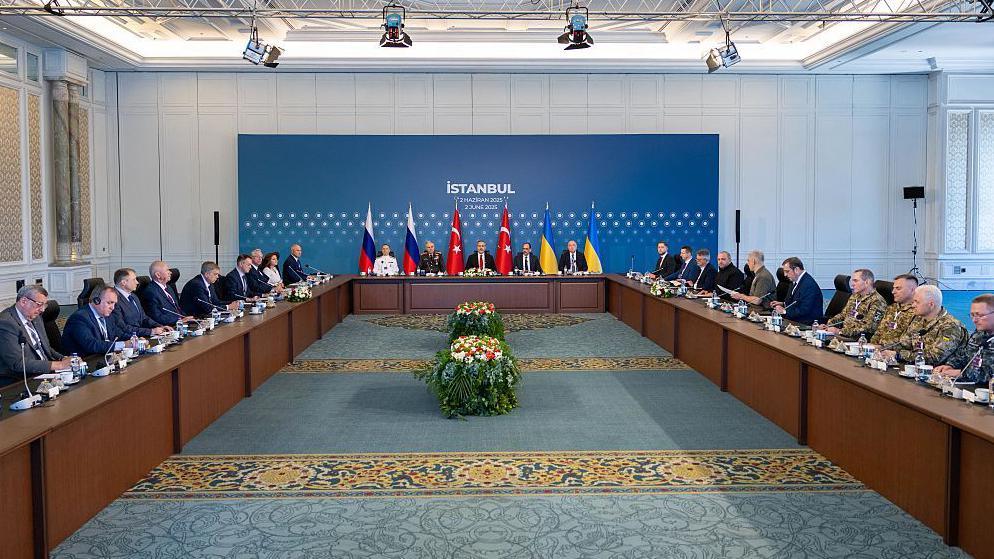
The exchange stands out as one of the few concrete, positive results to emerge from months of difficult diplomacy involving the United States, Ukraine, and Russia. Three rounds of trilateral talks were held in the United Arab Emirates and Switzerland in January and February, producing an agreement on the prisoner swap but no breakthrough on the fundamental territorial disputes that continue to make a comprehensive peace deal elusive. Russia maintains its demand for Ukraine to relinquish control of the entire Donbas region, including areas Ukraine still holds, as a precondition for any settlement. Ukraine has refused. In a February session, Zelenskyy publicly rebuked Russia's chief negotiator, Vladimir Medinsky, for spending sessions on "historical nonsense" rather than substance. Kremlin sources told Bloomberg this weekend that Moscow may soon walk away from the talks entirely if Kyiv refuses to cede more territory.
Against this already difficult diplomatic backdrop, the situation became more complicated still. A fresh round of trilateral talks had been scheduled for Abu Dhabi between March 5 and 9. That meeting was shelved indefinitely after the United States and Israel launched their joint military campaign against Iran on February 28, an event that sent shockwaves through every diplomatic channel in the region and made the UAE a deeply impractical venue for multilateral negotiations. "For now, because of the situation with Iran, the necessary signals for a trilateral meeting haven't come yet," Zelenskyy said in his nightly address Wednesday. "As soon as the security situation and the broader political context allow us to resume the trilateral diplomatic work, it will be done." Earlier in the week, Zelenskyy had suggested that alternative European locations — Switzerland, Turkey, Austria, or even the Vatican — could serve as venues for future sessions.
President Trump, meanwhile, renewed public pressure on Kyiv in an interview with Politico on Thursday, claiming that Russian President Vladimir Putin was ready to make a deal and warning that Zelenskyy's negotiating position was weakening. "Now, he's got even less cards," Trump said, without offering evidence for his assertion about Moscow's readiness to end the conflict. The comment drew quiet frustration from European capitals that have spent months warning against any settlement imposed under duress.
On Friday afternoon, Zelenskyy traveled to the front lines in eastern Ukraine to visit troops from the 28th Separate Mechanized Brigade in the Donetsk region. His message to them was direct, and carried a double meaning that was not lost on observers: "It is important not only from the point of view of defending our state on the battlefield, but it is also very important geopolitically. The stronger we are in the eastern direction, the stronger we are in the talks process." The war is now in its fifth year. The prisoner exchange gave 1,000 families reason to exhale — but the path to peace remains as unclear today as it was before the men stepped off those buses.