
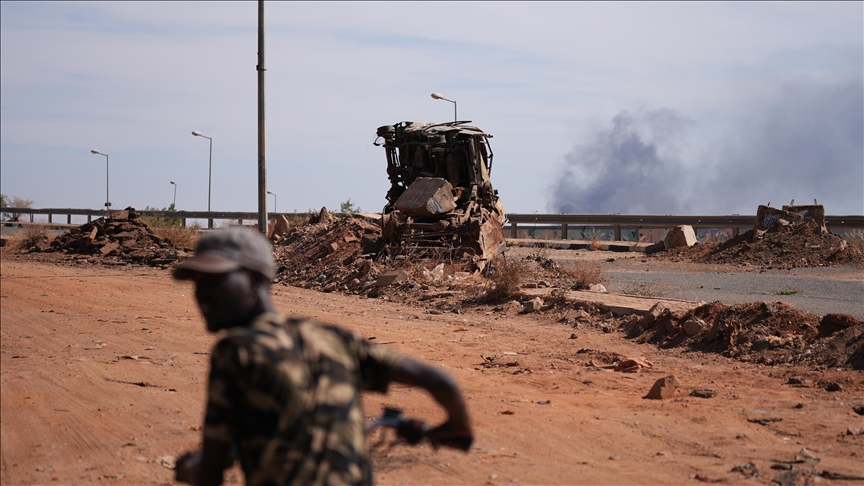
Sudan's civil war, now entering its third year, has escalated dramatically in the central Kordofan region this week, producing scenes of violence that have shocked even veteran humanitarian workers and prompted the United Nations to issue some of its starkest warnings since the conflict began. In a briefing to journalists in New York on Thursday, UN Secretary-General spokesperson Stéphane Dujarric described the situation in Kordofan as one of "alarming escalation," characterized by intensified fighting, drone bombardments, destruction of civilian homes and hospitals, and a progressive strangling of humanitarian supply routes that are leaving millions of people unable to access food or medical care.
The most disturbing incident of the week came when a drone strike struck the Dilling General Hospital — one of the few functioning medical facilities in South Kordofan — killing at least four patients and injuring several more civilians in the immediate vicinity. The attack is far from isolated: Dujarric reported that the city of El Obeid, the capital of North Kordofan, has faced "continued drone attacks over the past five days, with strikes reported against a hospital as well as government sites." The roads connecting Kosti and El Obeid, which serve as lifelines for both humanitarian aid and commercial goods in the region, are now under consistent threat. Local humanitarian organizations say they have been unable to move supplies along key routes into the city of Dilling, where communities have faced severe shortages for more than two years.
The perpetrators of most of these attacks are the Rapid Support Forces — the paramilitary group that broke with the Sudanese Armed Forces in April 2023, triggering the civil war, and has since swept through much of the country's west and center. In October 2025, the RSF seized El Fasher, the capital of North Darfur and the military's last stronghold in the sprawling Darfur region, following an 18-month siege characterized by mass killings, sexual violence as a weapon of war, abductions for ransom, and deliberate starvation of civilian populations. This week, the UN's Independent International Fact-Finding Mission for Sudan delivered its most devastating verdict yet: the RSF's conduct in and around El Fasher constituted "a coordinated campaign of destruction" against non-Arab communities, and the panel found at least three of the five criteria that legally constitute genocide to have been met. The International Criminal Court has already launched a formal investigation into war crimes by both sides.
The RSF has now shifted its focus to Kordofan, bringing its strategy of drone warfare, civilian targeting, and aid interdiction with it. An attack on a convoy of trucks carrying food and humanitarian supplies in February killed three aid workers and wounded four more. Another drone strike targeting displaced families fleeing fighting near the city of Rahad killed at least 24 people, including eight children, two of them infants. The Sudan Doctors Network called each of these incidents a "blatant violation of international humanitarian law" and a war crime. Over 30 countries — all 28 European Union member states, plus Canada, New Zealand, and the United Kingdom — issued a joint statement this week expressing "grave concern" at the escalation and warning that intentional attacks on aid workers and the deliberate obstruction of humanitarian access "may amount to war crimes."
In a rare piece of positive news, UN aid trucks managed to reach Dilling and Kadugli this week with "life-saving" supplies, including more than 700 metric tons of food commodities from the World Food Programme to support nearly 70,000 people. But the UN's humanitarian coordinator warned that security conditions make sustained access almost impossible to guarantee. UN High Commissioner for Human Rights Volker Turk, who concluded a five-day visit to Sudan this week, ended it with a direct and chilling appeal: "The horrific violations and abuses committed during the capture of El Fasher must under no circumstances be repeated in Kadugli and Dilling." His warning, and the evidence mounting around him, suggests the worst may still be ahead.