
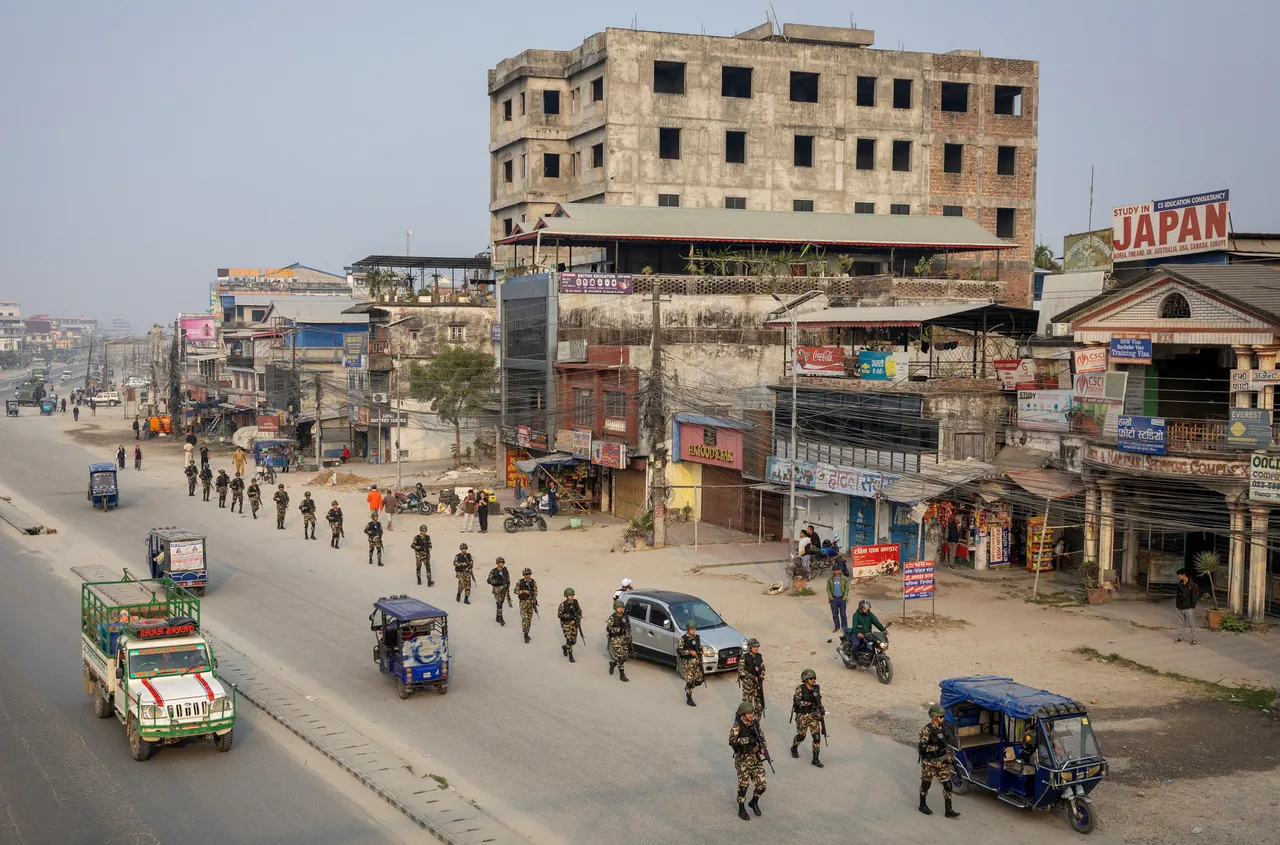
Nepal went to the polls on Thursday in a parliamentary election that election officials and international observers described as proceeding without major incident, with a turnout estimated at approximately 60 percent — roughly consistent with the participation rates recorded during Nepal's 2022 general elections. The vote, conducted across all 77 districts of the landlocked Himalayan nation, marked a moment of genuine consequence for a democracy that has struggled more than almost any other in Asia to achieve sustained political stability.
The stakes of this election are difficult to overstate for Nepalese citizens who have watched their country cycle through ten different governments in the span of a decade. That instability — driven by coalition fragility, defections, votes of no confidence, and the fractured nature of a parliament divided among multiple parties and factions — has had real and measurable consequences. Large infrastructure projects, from hydropower development to road construction, have stalled or been scrapped as leadership changes derailed continuity of planning. Foreign investment, which Nepal has courted aggressively as a mechanism to reduce its dependence on remittances from Nepalese workers abroad, has been repeatedly undercut by the perception that no government can be trusted to honor its commitments beyond a legislative term. And public trust in the political class has eroded steadily, a trend that has fueled a growing brain drain of young Nepalese who see emigration — primarily to Qatar, the UAE, South Korea, and increasingly the United States — as preferable to building a career in a country where the rules keep changing.
Three main political forces contested the election for the 275 seats of the House of Representatives. The Nepali Congress, the country's oldest and largest democratic party, entered the campaign as a slight frontrunner based on polling, having led the most recent government. Its principal rival, the Communist Party of Nepal–Unified Marxist Leninist (CPN-UML), remains a powerful force with deep roots in rural areas, and has governed Nepal multiple times over the past two decades. The third major contender, the Unified Communist Party of Nepal (Maoist Center), has seen its support erode in recent years but retains enough of a base to serve as a kingmaker in any coalition arrangement. Smaller regional and ethnic parties are also contesting seats, particularly in the mountainous northern districts and the southern Terai plain, where questions of federal autonomy and representation remain unresolved.
The geopolitical context in which this election takes place adds further significance to its outcome. Nepal occupies one of the most sensitive geographic positions in the world, sandwiched between two of the planet's most powerful and competitive nations: China and India. Both neighbors have invested heavily in courting Nepalese political parties and governments — China through infrastructure financing under its Belt and Road Initiative, India through longstanding cultural, economic, and security ties that date to Nepal's founding as a modern state. The party that emerges from this election with the most influence will inevitably face pressure from both Beijing and New Delhi to prioritize their respective interests, a balancing act that has historically required more diplomatic dexterity than Nepal's revolving-door governments have been able to muster.
Preliminary results are expected within the next 48 to 72 hours, with the final official count to follow after any disputes are resolved. International observers from the United Nations, the European Union, and regional bodies including the South Asian Association for Regional Cooperation (SAARC) were present across the country to monitor the process and will issue their assessments in the coming days. Whether Thursday's vote produces a stable single-party majority — which would be a first in Nepal's recent history — or leads to yet another delicate coalition arrangement that could unravel within months remains to be seen. But for millions of Nepalese who cast their ballots on a clear Himalayan morning, the act of voting is itself a statement of faith in the possibility that their country's political story might, finally, be turning a page.