
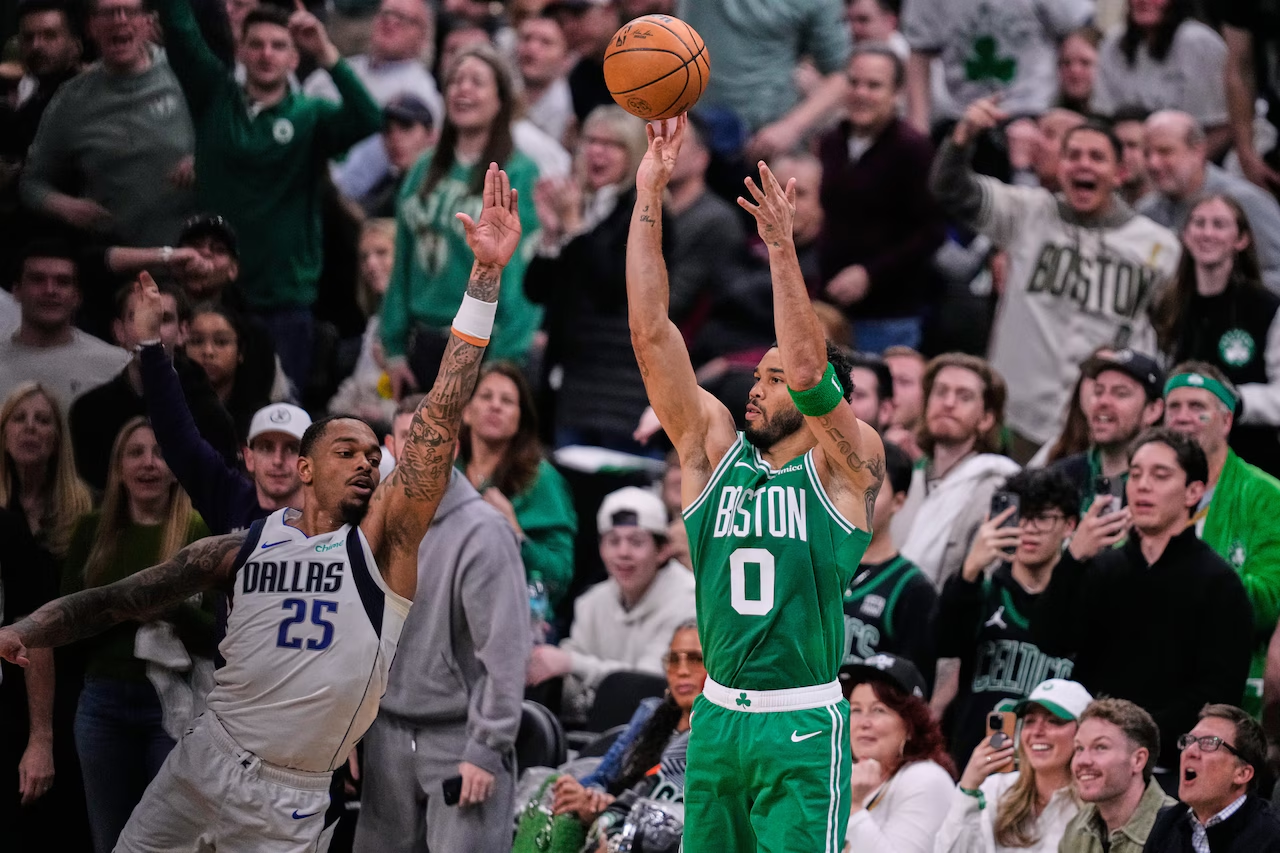
When Jayson Tatum emerged from the tunnel at TD Garden on Friday night, the building erupted with a volume that rattled the rafters — a sound that had been ten months in the making. The Boston Celtics superstar, 28, made his improbable season debut against the Dallas Mavericks just 297 days after rupturing his right Achilles tendon in Game 4 of last season's Eastern Conference semifinals. What followed was one of the most emotionally resonant performances Boston fans have witnessed in years: 15 points, 12 rebounds and 7 assists in 27 minutes, as the Celtics rolled to a 120-100 victory.
The Achilles rupture, suffered at Madison Square Garden against the New York Knicks in May of 2025, was the kind of injury that has historically taken careers in a different direction. Indiana Pacers star Tyrese Haliburton and Milwaukee's Damian Lillard both suffered Achilles tears in the same playoff run and were ruled out for the entire 2025-26 season. Tatum chose a different path. He had surgery the morning after the injury to prevent swelling from setting in, beginning a relentless rehabilitation process that he documented in a recently released documentary titled "The Quiet Work." He worked with his orthopedic surgeon, Dr. Martin O'Malley, for three hours a day, six days a week, rebuilding from the ground up. "I don't think I've seen a person's calf look as strong as his," Dr. O'Malley said. "At six or eight weeks he was doing double heel rises."
There were moments when even Tatum himself wasn't sure he would return this season. A January report suggested he might shut it down entirely and preserve his health for next year. But by February he was participating in controlled scrimmages, and by late February he was assigned to the team's G League affiliate, the Maine Celtics, for full practice sessions. The Celtics listed him as questionable Thursday, upgraded him to available Friday afternoon, and confirmed he would start — a decision that sent tremors through the NBA.
The game itself was not without its awkward moments. Tatum air-balled his first three-point attempt and front-rimmed a dunk in his opening stint, looking understandably cautious about attacking vertically on a newly repaired tendon. But with 1:11 remaining before halftime, he glided in for a put-back dunk off a missed three by Payton Pritchard, and on the very next possession slid to the corner and buried a step-back three. TD Garden detonated. From that point forward, Tatum played like himself — or close enough to make it clear that the player who averaged 26.8 points, 8.7 rebounds and 6.0 assists last season is still very much in there.
"I had a real sense of gratitude," Tatum said after the game. "Just being back on the floor and playing basketball again. It just kind of brought me back to everything I've been through the last 10 months, and the fact that I was able to even be out there today was a really big win for me." Coach Joe Mazzulla, who oversaw a Celtics team that had outperformed virtually every expectation in Tatum's absence, was careful not to get carried away. "He came on the other side of this a better person, and I know a better player. That's all you can ask for."
The questions around how Tatum's return affects the dynamic of the team — particularly his partnership with Jaylen Brown, who has been one of the league's top players this season in his absence — will be fascinating to watch. Brown has seen his usage rate jump to second in the league, and he has emerged as a legitimate MVP candidate. Now, with 20 games left in the regular season and the playoffs approaching, the Celtics suddenly look like the most dangerous team in the Eastern Conference.