
The yearslong legal battle between Energy Transfer — the Texas-based corporation behind the Dakota Access Pipeline — and the international environmental organization Greenpeace has produced its defining moment. On February 27, North Dakota District Court Judge James Gion finalized a judgment ordering three Greenpeace entities to pay a combined $345 million in damages to the pipeline company, stemming from events that took place nearly a decade ago during the Indigenous-led protests at Standing Rock. It is the largest damage award ever imposed on Greenpeace, and an amount that the organization's leadership has said it cannot pay — raising the genuine prospect of a forced bankruptcy for one of the world's most prominent environmental groups.
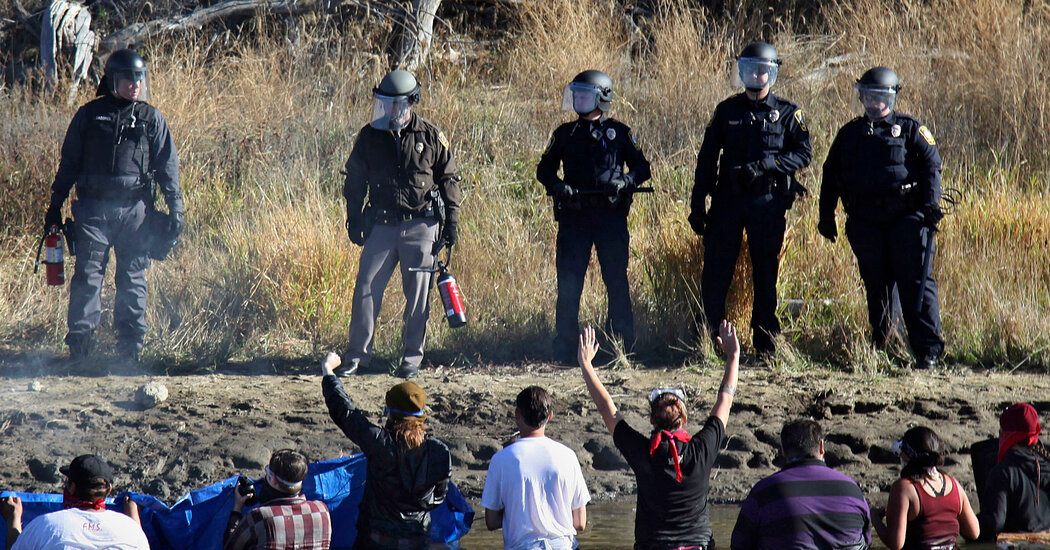
The case originated in the explosive protests of 2016 and 2017, when thousands of activists — drawn primarily by the Standing Rock Sioux Tribe's opposition to the pipeline's planned route through their ancestral lands and across the Missouri River, upstream from their reservation — camped in North Dakota for months in what became the largest Indigenous-led demonstration in modern American history. The protests drew hundreds of celebrities, veterans, and environmental advocates, attracted global media coverage, and resulted in hundreds of arrests. Energy Transfer filed its lawsuit against Greenpeace in 2019, accusing the organization of orchestrating criminal behavior, sending blockade equipment, and waging a deliberate misinformation campaign that falsely characterized the pipeline as an environmental threat and damaged the company's business.
A nine-person jury sided with Energy Transfer in March 2025, initially awarding the company more than $667 million. That figure was so large that Greenpeace argued it clearly exceeded statutory caps on damages and would instantly bankrupt all three named entities. Judge Gion agreed in part, slashing the jury's award by roughly half to $345 million in October — still a staggering sum. The final order, issued February 27, confirmed that amount and added an 11% annual interest charge from the date of the original jury verdict until the judgment is paid in full.
Greenpeace's response was unambiguous. "This judgment is meant to shut the movement up," said Mads Christensen, executive director of Greenpeace International. Marco Simons, Greenpeace USA's interim general counsel, called the lawsuit "a blatant attempt to silence free speech" guaranteed by the U.S. Constitution. The organizations announced they would seek a new trial and, if denied, appeal to the North Dakota Supreme Court. In a parallel legal track, Greenpeace International has filed suit against Energy Transfer in the Netherlands under the European Union's anti-SLAPP directive — a landmark test case for how American corporations can use litigation across borders to suppress activism.
Legal observers and civil liberties organizations have raised the alarm about what this ruling signals for the broader landscape of protest rights in the United States. The Center for International Environmental Law described the verdict as "a textbook SLAPP — a strategic lawsuit against public participation, designed to silence dissent and incapacitate environmental advocates through crushing legal costs." The prospect of a $345 million verdict against an organization for supporting a protest movement — and for publishing statements that echoed positions taken in United Nations reports — has alarmed advocates across the political spectrum. Energy Transfer, for its part, expressed confidence, noting the ruling "will send a clear signal to those who choose to deliberately break the laws of the United States of America." The battle now moves to appellate courts, but its eventual outcome will shape the landscape of activism, environmental advocacy, and corporate legal strategy in this country for years to come.