
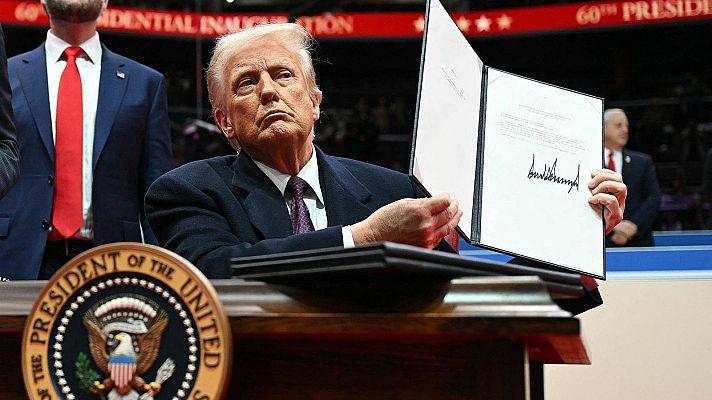
The United States government formally delivered to the Secretary-General of the United Nations the official notification of withdrawal from the Paris Agreement, a global treaty designed to coordinate international efforts in reducing greenhouse gas emissions and limiting global warming.
The notification, submitted on January 27, 2026, marks the country's withdrawal from the climate pact, a step previously announced by the president as part of his national policy platform. This process effectively ends the United States' second membership of the Paris Agreement, after the country withdrew during a previous administration and then rejoined under a different one.
The withdrawal comes amid a heated internal political debate about the validity and economic impact of environmental commitments that some sectors consider restrictive for traditional energy production. While the government argues that it prioritizes energy independence and the strengthening of productive sectors, critics maintain that the decision weakens the global fight against climate change and could isolate the country among allies committed to the green transition.
Environmental organizations, political leaders from opposition parties, and several allied countries have expressed their concern and disapproval. Many have stated that the withdrawal of the United States—the world's second-largest historical emitter of CO₂—could hinder the collective goal of keeping the increase in global average temperature below 2°C, preferably closer to 1.5°C.
The reaction was immediate in international forums: European diplomats and representatives of countries vulnerable to climate change called on the global community not to reduce its efforts despite the absence of the United States, and some announced plans to strengthen their commitments under the Paris Agreement.
Domestically, the withdrawal has spurred debates about the future of environmental policies in the upcoming legislative and presidential elections. Leaders from both parties have outlined alternative proposals, ranging from market-based approaches to incentivize clean energy to measures that integrate environmental objectives with employment and industrial competitiveness strategies.
Meanwhile, climate and economic experts warn that the US withdrawal from the agreement could have lasting effects not only on global emissions, but also on the ability to coordinate climate response internationally, especially in areas of technological innovation and climate finance.